
Property Structure & Pest Activity
Ravenswood
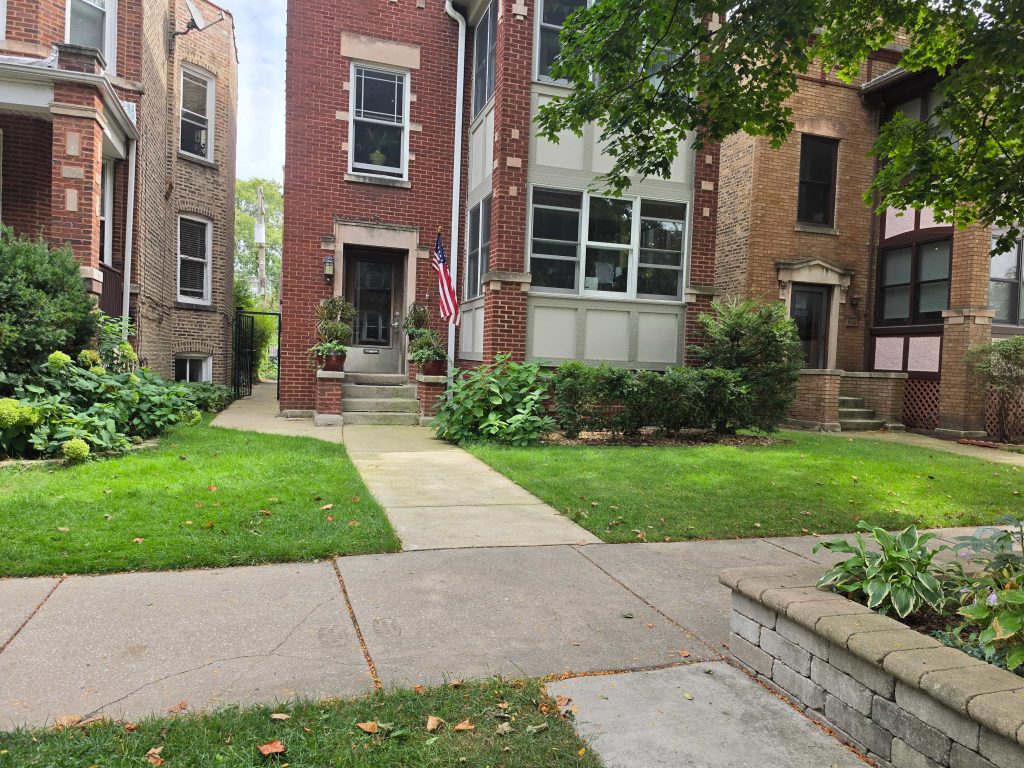
Ravenswood includes single-family houses, brick two-flats, apartment buildings, and other residential properties across older and early- to mid-20th-century housing layers. Basements and detached garages occur within the mix, but a detached residence and a multifamily building can present very different access and service layouts. My Pest Crew bases the work on the specific building and reported activity rather than treating those forms as interchangeable.
Building Style
Ravenswood includes older detached houses, brick two-flats, apartment buildings, and early- to mid-20th-century two- and three-flat or bungalow-type housing. Basements and detached garages occur within the residential mix. A single-family house and an apartment property can therefore present different lower-level, rear-property, and access conditions even within the same neighborhood.
Common Structural Entry Points
- Foundation cracks.
- Unsealed basement or lower-level penetrations.
- Separation around window frames.
- Unsealed utility, pipe, or other service penetrations through the exterior.
- Open exterior vent penetrations.
- Open masonry joints.
- Gaps at rear-porch-to-building connections.
- Gaps at exterior door thresholds.
Pests We Address in Ravenswood
- Rats
- Mice
- Ants
- Cockroaches
- Spiders
- Centipedes
- Millipedes
- Silverfish
- Earwigs
- Pillbugs
- Sowbugs
- Bed bugs
- Wasps and hornets
- Flies
- Boxelder bugs
Our Treatment Approach
My Pest Crew bases service on the activity confirmed at the property and the accessible conditions relevant to that service. Ravenswood’s older detached houses and two-flats can present different building conditions from one address to another. Broader property conditions outside pest-control work are documented when they affect the service.
Pest Control Services in Ravenswood
In Ravenswood, rear-property areas and the exterior around detached garages may be part of exterior Rat Control. My Pest Crew reviews visible exterior rat activity, including active burrows when present, and bases treatment on current property findings. Follow-up or maintenance planning is based on later activity levels rather than one fixed schedule.
Basements and detached garages can be separate accessible areas to review on Ravenswood houses and two-flats when the reported activity involves them. Mouse Control is based on the activity found at the property and the accessible areas connected to that service. Affected areas are treated, and small accessible openings may be temporarily blocked as part of the pest-control work. Permanent sealing and larger construction repairs are not included, and the standard service includes a return visit to review activity.
Ravenswood’s older detached houses, brick two- and three-flats, bungalows, and apartment buildings create a varied residential setting for General Pest Control. Common crawling-insect activity can involve different accessible areas depending on whether the property is a detached residence, small multifamily building, or another residential form. Standard General Pest Control includes an initial visit and an included follow-up about 3–4 weeks later.
Ant Control is based on ant activity confirmed during the visit. Depending on the arranged service and what is found, treatment may cover interior areas, exterior areas, or both. Follow-up or additional service depends on the service arranged.
Ravenswood’s two-flats and apartment buildings can require access coordination across the confirmed occupied areas. Cockroach Control is focused on German-roach activity in occupied interiors. Professional treatment is selected for the confirmed active areas, with an initial treatment followed by a second visit about 3–4 weeks later.
Spider Control may cover scheduled interior areas, exterior areas, or both. My Pest Crew reviews reported spiders and recurring web activity, then treats the accessible scheduled areas according to what is found.
For brick two-flats and apartment buildings alongside detached houses in Ravenswood, Bed Bug Treatment begins with inspection so the agreed property or unit and the sleeping or resting areas involved are clear before treatment is scheduled. Once activity is confirmed, the standard service includes the initial treatment and a follow-up usually 10–14 days later.
Wasp & Hornet Control starts with a visible nest or repeated activity concentrated around one exterior area. Service is limited to a maximum access height of 25 feet. If the nest is concealed, the technician determines what can be reached and treated from the active exterior area; physical nest removal is performed only when the nest is accessible and conditions allow it. My Pest Crew does not perform wall cutting or structural repair.
Fly Control begins with the reported activity and a review of the relevant accessible areas. My Pest Crew treats accessible active areas according to the conditions found during the visit. If a suspected source cannot be accessed, it may remain unconfirmed.
Boxelder Bug Treatment is primarily an exterior service based on visible activity in accessible affected areas. Interior treatment may also be performed when boxelder bugs have entered the structure. Standard service includes an initial treatment and an included follow-up approximately 3–4 weeks later. Permanent sealing, property repair, maintenance work, landscaping, and construction work are not included.
The Home Pest Protection Plan is available after My Pest Crew completes the appropriate initial service. Quarterly visits include interior General Pest Control throughout accessible areas, review and treatment of covered reported activity, exterior granular bait, and monitoring when useful. Exterior spray is separate and may be arranged as a seasonal add-on. Covered activity between quarterly visits can receive an additional visit at the reduced plan rate. Active mouse or rat concerns begin with the corresponding initial rodent service, and more frequent rodent visits may be arranged when quarterly service is not frequent enough for the activity found.
Nearby Service Areas
Explore nearby service areas within My Pest Crew’s coverage. Each area has its own construction mix and property conditions, so service is based on the individual property rather than assumed from proximity.
Lincoln Square combines a substantial prewar residential layer with later postwar construction, ongoing rehabilitation, and newer infill. Two- and three-flats are an important part of the neighborhood, alongside bungalows, detached houses, courtyard apartments, and smaller multifamily buildings. That mix creates meaningful property-to-property differences in how older and newer building assemblies come together, so pest-control service has to reflect the individual property rather than one neighborhood-wide construction pattern.
Andersonville’s property mix is defined by a clear contrast between the Clark Street commercial and mixed-use corridor and East Andersonville’s flats and apartment buildings. Storefront buildings, upper-floor commercial facades, two-flats, three-flats, six-flats, and larger residential properties create very different exterior and occupied-space conditions within a relatively small area. My Pest Crew approaches service from the construction and layout present at the individual address rather than treating Andersonville as one uniform building type.
North Center combines a strong early- to mid-20th-century residential layer with newer construction. Chicago bungalows, brick and frame two-flats, detached houses, and smaller multifamily properties remain important, while newer residences add a later construction layer. Basements, detached garages, and some larger interior-block single-family lots give the neighborhood more physical variation than a simple two-flat description suggests.
Lakeview brings several classic Chicago housing forms together within a dense residential setting. Early-20th-century two- and three-flats, courtyard buildings, bungalows, apartment properties, and condominiums coexist with later residential construction. That combination creates a broader range of lower-level, rear-property, and shared-building conditions than a neighborhood dominated by one housing form.
Uptown has a strong large-multifamily identity. Vintage courtyard buildings, six-flats, two-flats, and larger apartment properties form an important early-20th-century layer, while condominiums and other residential buildings add further scale and age variation. Shared lower levels, rear service areas, and common-building conditions distinguish Uptown from neighborhoods centered on detached housing.
Schedule Pest Control for Your Property
Tell us what you’re seeing at the property. My Pest Crew will review the situation and recommend the appropriate service.
Serving Chicago, the North Shore, and nearby north and northwest suburbs.